- Ditch the Dairy, Embrace the Delish: 11 Foods for a Thriving Vegan Diet
- Joining the Zero Waste Revolution Through Community
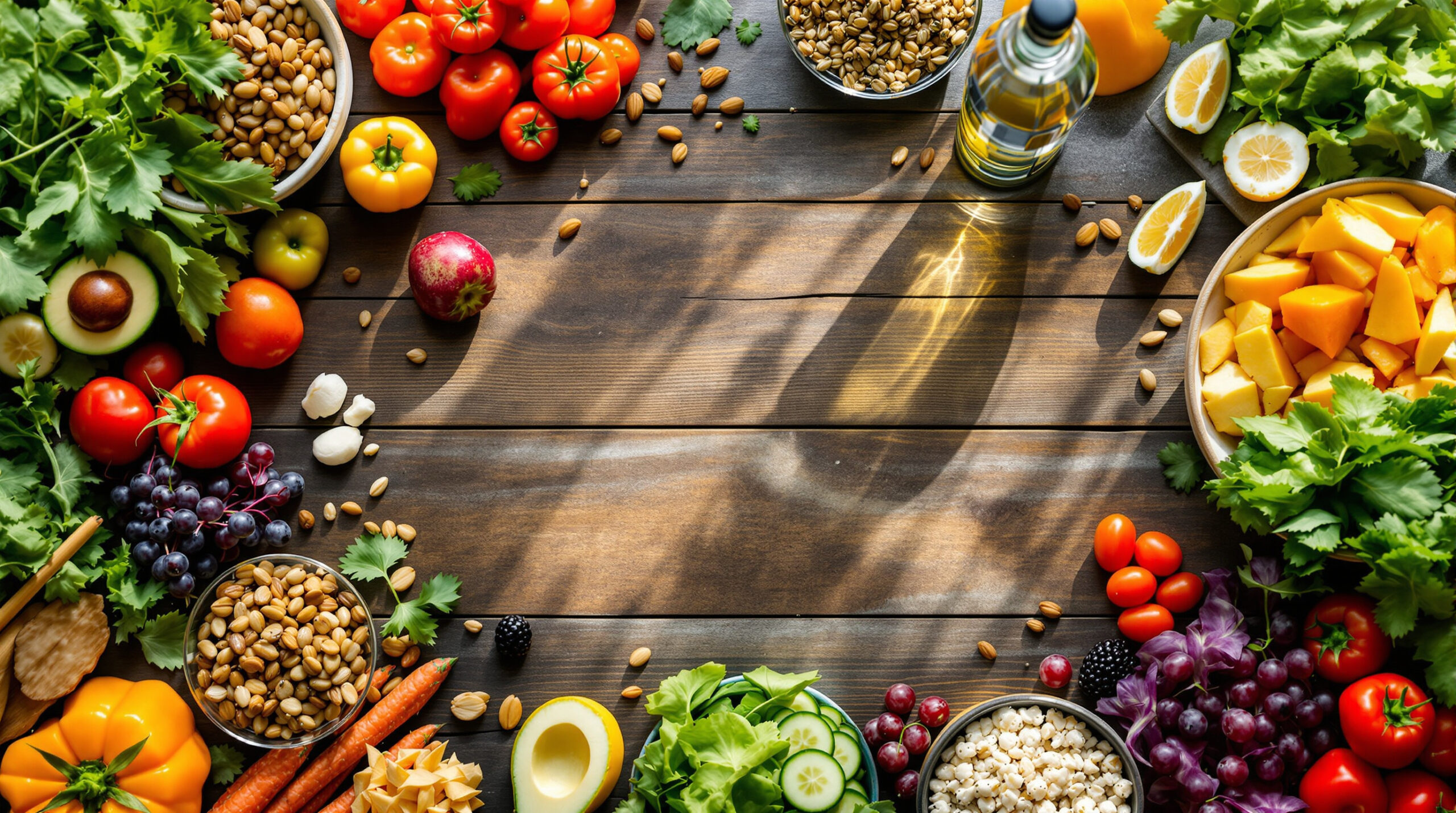
- What are the healthiest foods to eat every day?
- How many servings of fruits and vegetables do you need?
- Is home cooking healthier than pre-made meals?
- Which common foods should you stop eating?
- How do you eat healthy on a budget?
Nutritionists recommend the 50-25-25 plate rule – half vegetables and fruits, one quarter lean protein, one quarter complex carbs. Focus on whole, minimally processed foods like leafy greens, berries, legumes, and whole grains. Only 1 in 10 adults eat enough produce, so adding one extra serving per meal is the simplest high-impact change.
Before
White toast with margarine, orange juice, and a granola bar for breakfast – 42g of added sugar and minimal protein or fiber.
After
Overnight oats with berries, chia seeds, and a handful of walnuts – 3g of added sugar, 14g of protein, and 8g of fiber for under $1.50 per serving.
The 50-25-25 Plate Rule
Nutritionists use a simple framework for building balanced meals:
- 50% vegetables and fruits – fill half your plate with colorful produce
- 25% lean protein – chicken, fish, beans, tofu, or eggs
- 25% complex carbohydrates – brown rice, quinoa, sweet potatoes, or whole-grain bread
Confused by conflicting nutrition advice? Registered dietitians share the straightforward answers to the healthy eating questions they hear most – from daily food staples and produce targets to budget-friendly strategies that work in the real world.
- What are the healthiest foods to eat every day?
- How much fruit and vegetables should you eat per day?
- How can you eat healthy on a tight grocery budget?
Nutritionists recommend building everyday meals around whole, minimally processed foods – lean proteins, vegetables, fruits, whole grains, and healthy fats. A balanced plate typically follows the 50-25-25 rule: half vegetables and fruits, one quarter protein, and one quarter complex carbohydrates. Consistency matters more than perfection, and small sustainable swaps – like choosing water over sugary drinks or adding one extra vegetable serving daily – create lasting health improvements without restrictive dieting.
What Are the Healthiest Foods to Eat Every Day According to Nutritionists?
Registered dietitians consistently recommend a core group of nutrient-dense foods as daily staples. These foods provide essential vitamins, minerals, fiber, and antioxidants that support long-term health and reduce chronic disease risk.
| Food Group | Top Daily Picks | Key Nutrients |
|---|---|---|
| Leafy greens | Spinach, kale, Swiss chard | Vitamin K, folate, iron |
| Berries | Blueberries, strawberries, raspberries | Antioxidants, vitamin C, fiber |
| Lean protein | Salmon, chicken breast, eggs | Omega-3s, B vitamins, complete protein |
| Whole grains | Oats, quinoa, brown rice | Fiber, magnesium, B vitamins |
| Healthy fats | Avocado, olive oil, walnuts | Monounsaturated fat, vitamin E |
| Legumes | Lentils, black beans, chickpeas | Plant protein, fiber, iron |
Research published in the New England Journal of Medicine found that adherence to a Mediterranean-style diet – rich in these same food groups – reduces cardiovascular disease risk by 25-30%. The pattern matters more than any single food.
How Much Fruit and Vegetables Should You Actually Eat Per Day?
The World Health Organization recommends at least 400 grams (roughly 5-9 servings) of fruits and vegetables daily. The USDA Dietary Guidelines for Americans 2020-2025 align with this target, recommending 2 cups of fruit and 2.5-3 cups of vegetables per day for most adults.
Yet only 1 in 10 U.S. adults currently meets these recommendations, according to the CDC. The gap between guidelines and reality is one of the largest missed opportunities in preventive health.
What Counts as One Serving?
- 1 medium fruit (apple, banana, orange)
- 1/2 cup of chopped, cooked, or canned produce
- 1 cup of raw leafy greens
- 1/4 cup of dried fruit
A practical strategy: add one extra serving at each meal. Berries in morning oats, a side salad at lunch, and roasted vegetables with dinner gets most people to the minimum target without overhauling their routine.
Is It Healthier to Cook at Home or Buy Pre-Made Health Foods?
Home-cooked meals are healthier in most cases. Research from the Johns Hopkins Bloomberg School of Public Health found that meals prepared at home contain roughly 50% fewer calories than restaurant or pre-packaged equivalents, with significantly less sodium, sugar, and saturated fat.
Americans spend an average of $7,316 per year on food consumed at home, according to the USDA Economic Research Service. Cooking from scratch typically costs $2-4 per serving compared to $8-15 for equivalent pre-made “healthy” meals.
When Pre-Made Options Work
Not all convenience food is unhealthy. These pre-made options are nutritionist-approved:
- Frozen vegetables and fruits – flash-frozen at peak nutrition, no added ingredients
- Canned beans and lentils – rinse to reduce sodium by up to 40%
- Pre-washed salad greens – removes the prep barrier
- Plain Greek yogurt – high protein, versatile base
What Common Foods Do Nutritionists Say People Should Stop Eating?
Ultra-processed foods are the primary target for reduction. A 2024 study in BMJ Open found that ultra-processed foods account for 57% of caloric intake in the average American diet – a figure that correlates with higher rates of obesity, type 2 diabetes, and cardiovascular disease.
Nutritionists consistently flag these categories for reduction or elimination:
- Sugary beverages – sodas, energy drinks, and sweetened coffees (often 30-60g of added sugar per serving)
- Refined grain products – white bread, pastries, and sugary cereals stripped of fiber and nutrients
- Processed meats – hot dogs, bacon, and deli meats classified as Group 1 carcinogens by the WHO
- Packaged snacks – chips, cookies, and candy bars engineered for overconsumption
The goal is not perfection. Nutritionists recommend the 80/20 approach: aim for whole, nutrient-dense foods 80% of the time, leaving room for flexibility without guilt.
How Can You Eat Healthy on a Tight Grocery Budget?
Healthy eating does not require a premium budget. Many of the most nutrient-dense foods available are also among the most affordable when measured by cost per serving.
Budget-Friendly Staples Nutritionists Recommend
| Food | Approximate Cost per Serving | Key Benefit |
|---|---|---|
| Dried lentils | $0.15-0.25 | 18g protein, 15g fiber per cup |
| Frozen vegetables | $0.25-0.50 | Equal nutrition to fresh, no waste |
| Oats (rolled) | $0.10-0.20 | 4g fiber, sustained energy |
| Eggs | $0.25-0.35 | 6g complete protein each |
| Canned tuna | $0.50-0.75 | 20g protein, omega-3s |
| Bananas | $0.10-0.15 | Potassium, quick energy |
Three strategies that stretch a grocery budget further: buy seasonal produce (30-50% cheaper at peak season), batch cook proteins and grains on weekends, and shop the store perimeter where whole foods are typically stocked.
- Follow the 50-25-25 rule: half produce, quarter protein, quarter complex carbs
- Eat 5-9 servings of fruits and vegetables daily – only 1 in 10 adults currently meets this target
- Cook at home when possible – home meals contain roughly 50% fewer calories than pre-made alternatives
- Reduce ultra-processed foods – they account for 57% of the average American’s caloric intake
- Healthy eating is budget-friendly – staples like lentils, oats, and frozen vegetables cost $0.10-0.50 per serving
Healthy eating comes down to a few consistent habits: fill half your plate with produce, choose whole foods over processed alternatives, and cook at home when possible. The evidence is clear that small, sustainable changes outperform restrictive diets every time. Start with one swap this week – whether that is adding a serving of vegetables to dinner or replacing a sugary drink with water – and build from there.
Looking to build healthier eating habits that actually stick? Explore our collection of nutritionist-approved recipes and meal planning guides to make every meal count.
My Store provides practical, evidence-based content on nutrition, sustainable living, and healthy lifestyle choices. Our articles are informed by current research from leading health organizations including the WHO, USDA, and peer-reviewed medical journals.
- World Health Organization – Healthy Diet Fact Sheet
- USDA Dietary Guidelines for Americans 2020-2025
- Harvard T.H. Chan School of Public Health – Healthy Eating Plate
- CDC – Nutrition Resources
- American Heart Association – Healthy Eating
- Academy of Nutrition and Dietetics
This article answers 5 common questions about healthy eating based on nutritionist recommendations. Key points: follow the 50-25-25 plate rule, eat 5-9 servings of produce daily, cook at home to cut calories by 50%, reduce ultra-processed foods (57% of average intake), and use budget staples like lentils and oats at $0.10-0.50 per serving.